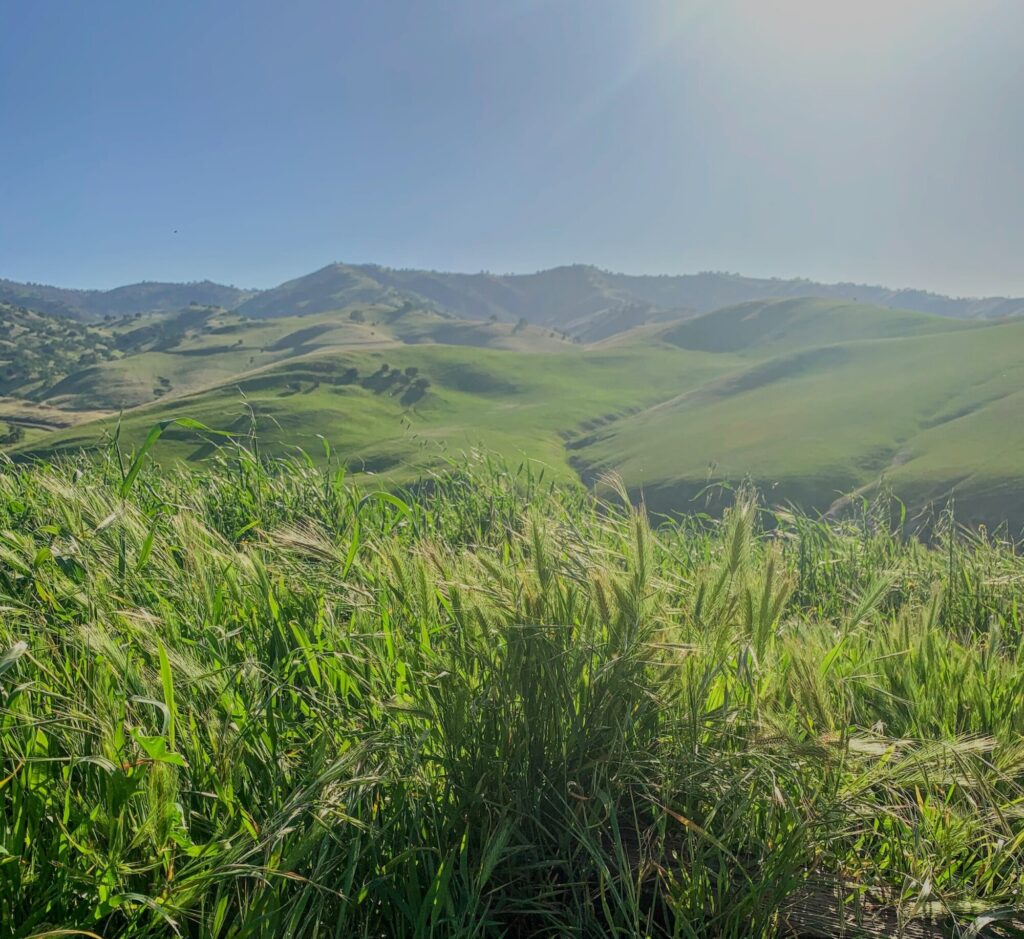
Rangeland, like that on Connolly Ranch, helps reduce carbon levels
Rangeland, like that on Connolly Ranch, is a big player in the fight against rising carbon levels as described by the American Grassfed Association:
How it works:
1. Plants pull carbon from the air: every blade of grass captures carbon dioxide during photosynthesis. The more grass the more it pulls carbon from the air.
2. Roots store carbon underground: unlike annual crops that are harvested each year, perennial grasses send carbon deep into the soil through their roots. This carbon becomes part of the soil organic matter – essentially locking it away for future use.
3. Animals keep the cycle going: our cattle graze the pastures and stimulate regrowth meaning more photosynthesis and more carbon pulled from the air.
Why it matters:
In feed lots or confinement, animals rely on grain that’s often grown using fossil fuels and chemical inputs. On pasture, animals partner with nature – recycling nutrients, improving soil health and boosting biodiversity. Well-managed grazing can actually reverse carbon loss from degraded soils.
What it means for you:
By choosing grass fed, pasture raised beef, you’re supporting ranchers that maintain their property as a natural carbon sink- land that actively pulls carbon out of the air and stores it safely underground.
Thank you to @amergrassfed for putting it so succinctly!